ph22 Probability in Casino Games
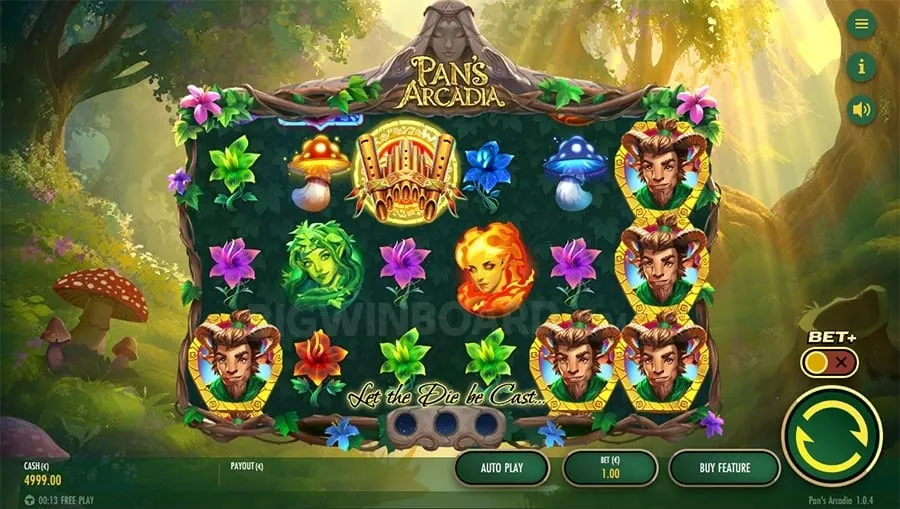
Mastering Probability in ph22 Casino Games
Welcome to the advanced guide on understanding and leveraging probability in casino games, specifically within the dynamic environment of ph22. This article is tailored for experienced players looking to deepen their strategic approach and gain a competitive edge. While luck undeniably plays a role, a solid grasp of probability is the cornerstone of informed decision-making in any casino setting, be it a traditional brick-and-mortar establishment or a modern mobile website. We will delve into the mathematical underpinnings of various games, providing you with advanced techniques and practical strategies to enhance your gameplay and potentially improve your long-term outcomes. Whether you're navigating the slots, engaging in a live dealer session, or exploring the vast array of games on offer, understanding the odds is paramount to becoming a more sophisticated and successful player.
In this guide, we will explore key concepts such as theoretical return to player (RTP), house edge, variance, and how these apply to popular casino games available on platforms like ph22. We'll move beyond basic explanations, offering insights into how to calculate odds, identify advantageous situations, and manage your bankroll effectively based on probabilistic principles. Prepare to elevate your game from mere chance to calculated strategy, transforming your casino experience into a more engaging and potentially rewarding endeavor.
Table of Contents
- Understanding the Fundamentals: RTP, House Edge, and Variance
- Calculating and Interpreting Odds in Casino Games
- Advanced Strategies for Specific Games: Slots, Table Games, and Live Casino
- Bankroll Management and Risk Assessment Based on Probability
- The Psychology of Probability: Avoiding Cognitive Biases
- Leveraging Promotions and Bonuses with Probabilistic Thinking
Understanding the Fundamentals: RTP, House Edge, and Variance
At the core of understanding probability in casino games are three critical concepts: Return to Player (RTP), House Edge, and Variance. For experienced players on a mobile website like ph22, a deep understanding of these metrics is essential for strategic play. RTP, often expressed as a percentage, represents the theoretical amount of wagered money a slot machine or casino game will return to players over time. For instance, a game with 96% RTP means that, on average, for every 100 units wagered, 96 units are returned to players, with the remaining 4 units constituting the house edge. The higher the RTP, the better the theoretical return for the player. Many modern casino games prominently display their RTP, allowing informed players to choose games that offer better long-term prospects. This is particularly relevant when exploring the extensive range of slot games available on ph22.
The House Edge is the inverse of RTP, representing the casino's built-in advantage. It's the percentage of every bet that the casino expects to keep as profit over the long run. For example, a game with a 2% house edge means the casino expects to keep 2 cents for every dollar wagered. Understanding the house edge for different casino games, from blackjack to roulette, is crucial for selecting games where your money has the best chance to last longer and potentially yield returns. Advanced players don't just pick any game; they analyze the house edge to make calculated choices. Variance, or volatility, describes the risk level associated with a particular game. High-variance games offer the potential for large wins but with less frequent payouts, while low-variance games offer more frequent but smaller wins. Knowing a game's variance helps players align their game choice with their bankroll and risk tolerance. A player with a smaller bankroll might prefer lower-variance slot games to extend their playtime, while a high-roller might chase the bigger, less frequent payouts of high-variance games. On ph22, identifying these characteristics for various games can significantly impact your strategic approach.
Calculating and Interpreting Odds in Casino Games
For the advanced player, simply knowing the RTP or house edge isn't enough; understanding how to calculate and interpret specific odds within casino games is a valuable skill. This moves beyond general statistics into the realm of specific outcomes. In games like blackjack, knowing the probability of busting with an additional card, or the odds of the dealer having a certain hand, can inform your decisions to hit, stand, double down, or split. Poker players on ph22 constantly calculate pot odds and implied odds to determine if calling a bet is mathematically sound, weighing the cost of the call against the potential return of winning the pot. This involves understanding combinatorics – the number of possible outcomes and the number of favorable outcomes.
Even in seemingly simple slot games, while the exact odds of hitting a specific combination are usually hidden, understanding the concept of random number generators (RNGs) and payline probabilities is key. Advanced players recognize that each spin is an independent event, and past results do not influence future outcomes. This helps in avoiding fallacies like the gambler's fallacy. For roulette, calculating the odds of a specific number hitting, or a color, or a range, is straightforward (e.g., 1/37 for a single number in European roulette). Interpreting these odds means understanding the expected value of each bet – whether, over the long run, a particular bet is positive, negative, or neutral. By applying these calculations, experienced players can make more rational and less emotionally driven decisions, improving their overall strategic play on any mobile website, including ph22.
Advanced Strategies for Specific Games: Slots, Table Games, and Live Casino
Moving beyond general probability, advanced players apply tailored strategies to specific casino games found on platforms like ph22. For slot games, while individual spins are random, strategy involves more than just hitting the spin button. It includes selecting slots with favorable RTPs, understanding volatility, and effectively managing your bankroll based on the game's characteristics. For instance, a player targeting large jackpots might opt for high-variance progressive slots, understanding that wins will be infrequent but potentially massive. Conversely, a player seeking extended playtime might choose lower-variance slots. Advanced players also pay attention to bonus features and free spin mechanics, as these often offer the best probabilistic opportunities for significant returns. Many mobile website casinos, including ph22, offer detailed information about their slot games, which advanced players leverage.
In table games, strategy becomes even more intricate. Blackjack, for example, has a well-defined basic strategy that, when followed perfectly, reduces the house edge to its absolute minimum. Advanced players memorize and apply this strategy flawlessly, and some even delve into card counting (though difficult to implement online) or advanced betting systems (with caution, as most do not change the long-term house edge). For poker, mastery of probability is fundamental. Players must calculate pot odds, implied odds, and understand opponent tendencies to make profitable decisions. In live casino games on ph22, the interaction with a real dealer adds another layer. While the core probabilities remain, observing dealer patterns (in games like Baccarat or Roulette, though this doesn't alter mathematical odds) or leveraging social cues in games like live poker can offer subtle advantages. The key is to apply probabilistic thinking to every decision, maximizing your chances in each scenario across the diverse range of games offered by ph22.
Bankroll Management and Risk Assessment Based on Probability
Effective bankroll management is perhaps the most critical advanced strategy for any serious player on ph22 or any casino platform. It's not just about setting a budget; it's about making probabilistic decisions to preserve and grow your capital. Advanced players understand that even with a positive expected value strategy (which is rare outside of specific advantage play), variance can lead to losing streaks. Therefore, their bankroll must be sufficient to withstand these fluctuations. This involves calculating the appropriate unit size for bets relative to the total bankroll, often expressed as a percentage (e.g., never betting more than 1-2% of your total bankroll on a single outcome).
Risk assessment, informed by probability, guides these decisions. Before playing any casino game, especially a new one on a mobile website, advanced players assess its volatility and house edge to determine if it aligns with their risk tolerance and bankroll size. They might use simulations or statistical models to understand the potential swings and drawdowns they could face. For instance, a player engaging in high-variance slot games on ph22 might allocate a larger portion of their bankroll to absorb the longer dry spells, while a player focusing on low-house-edge table games might use smaller, more consistent bets. This scientific approach to bankroll management transforms gambling from a series of impulsive decisions into a calculated financial strategy, ensuring longevity and providing the best possible framework for long-term success on ph22.
The Psychology of Probability: Avoiding Cognitive Biases
Even with a strong understanding of mathematical probability, human psychology can be a player's greatest adversary. Advanced players on ph22 recognize and actively work to mitigate common cognitive biases that distort probabilistic thinking. One prevalent bias is the Gambler's Fallacy, where players mistakenly believe that past events influence future independent events (e.g., after a series of red outcomes in roulette, black is